
Q:How a Dual Plate Check Valve Works
A Dual Plate Check Valve operates automatically, using the flow pressure of the medium to control the opening and closing of its two spring-loaded plates.
When fluid flows in the forward direction, pressure pushes the two semi-circular plates outward, allowing smooth flow through the valve with minimal resistance.
As the flow decreases or reverses, the torsion springs quickly close the plates, preventing backflow and protecting pumps, compressors, and other critical equipment from potential damage.
The valve’s design features a central hinge pin, spring-assisted closing mechanism, and short wafer-type body, making it lighter, more compact, and more efficient than traditional swing check valves.
Its ability to reduce water hammer, combined with low maintenance requirements and high reliability, makes the dual plate check valve ideal for cooling water systems, fire protection, seawater desalination, petrochemical applications, and marine pipelines—a dependable choice for modern fluid control systems.
- Related Products
-
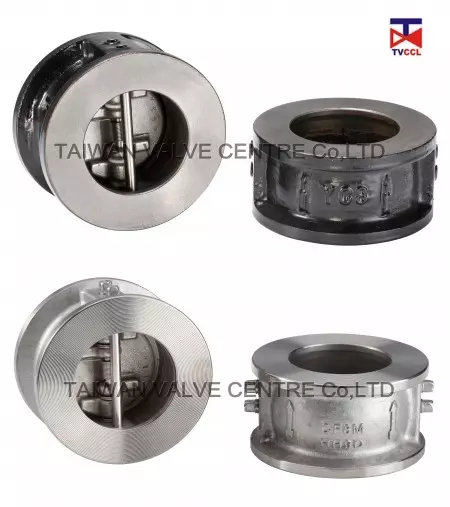
Dual Plate Wafer Type Check Valve
TC0
Fast Delivery: Most orders are shipped within 3-7 days, depending on stock availability. Versatile...
Details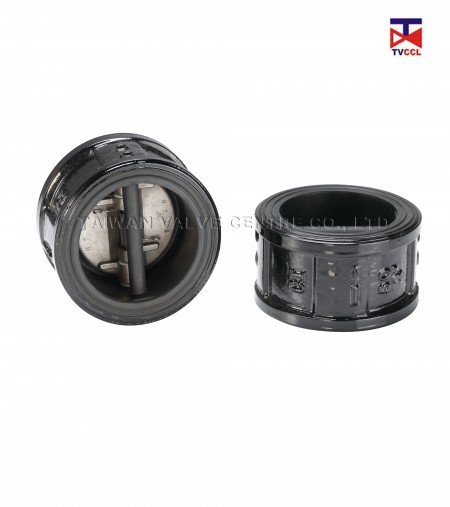
Dual Plate Wafer Type Check Valve with Full Rubber
TC1
Dual plate wafer type check valve with full rubber is usually used in seawater desalination...
Details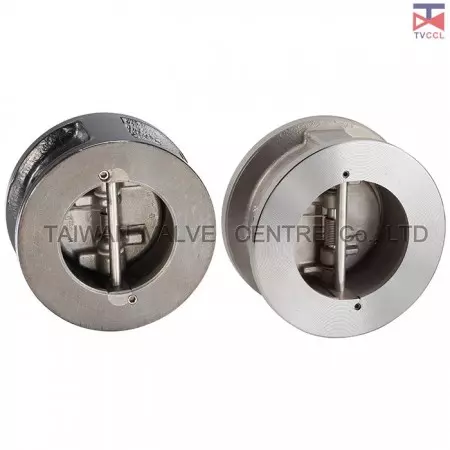
Dual Plate Wafer Type Check Valve With Retainerless
TC8
The dual disc check valve with its compact wafer design and low cost have made it a popular...
Details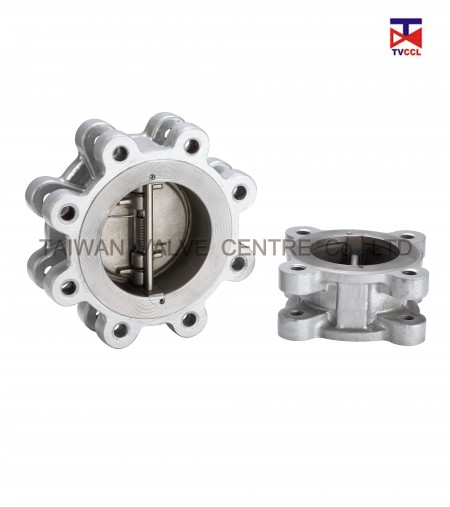
Dual Plate Lug Type Check Valve
TC6
Lug type double disc check valves typically feature multiple threaded bolt holes around the valve...
Details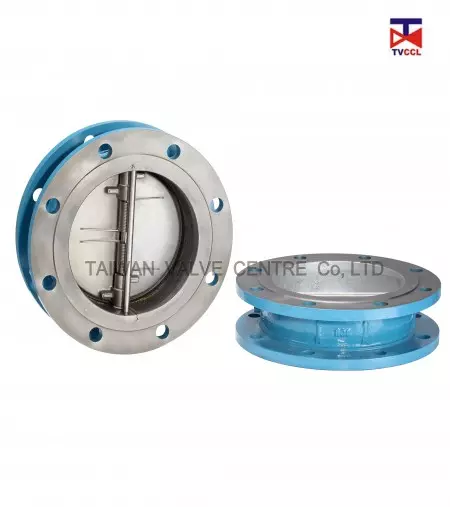
Dual Plate Flange Type Check Valve
TC4
Simplified Installation with Flange Type Design Unlike lug type check valves, flange type double...
Details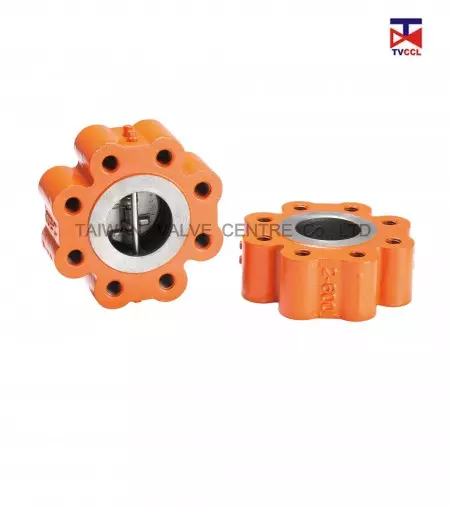
Dual Plate Full Lug Type Check Valve
TC9
Double disc lug type check valves are designed to ASME, JIS, ISO, AWWA...etc. specifications...
Details