
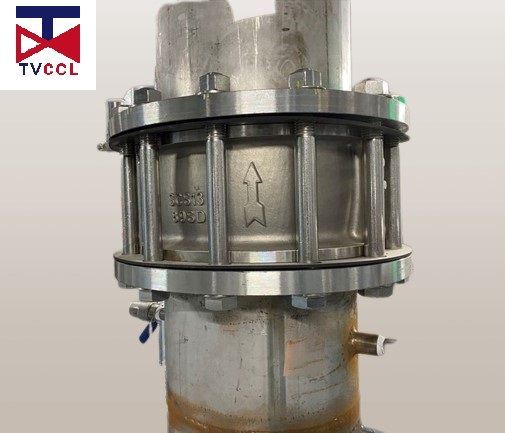
Why is 6 to 8 Pipe Diameters (6D-8D) the Optimal Installation Distance?
The industry-standard recommendation of 6 to 8 pipe diameters (6D to 8D) for check valve installation is deeply rooted in fluid dynamics. TVCCL engineers strongly advise this specific clearance to achieve the best possible flow behavior. Here is the science behind the 6D-8D rule:
1. The Transition to Laminar Flow: When fluid exits a pump or navigates a bend, the flow profile becomes highly turbulent and chaotic. Fluid dynamics dictate that it takes a physical distance to dissipate this energy. A straight run of 6 to 8 pipe diameters provides the exact space needed for the fluid to calm down and reform into a smooth, streamlined (laminar) profile before it strikes the valve plates.
2. Preventing Valve "Chattering": If the distance is less than 6D, the uneven velocity of turbulent flow will hit the two plates asymmetrically. This causes the plates to rapidly bounce or vibrate (known as chattering), leading to severe wear on the springs and hinges. The 6D-8D clearance completely eliminates this destructive turbulence.
3. Optimizing Closing Dynamics: A uniform flow profile allows the valve's spring mechanism to react predictably. When the pump stops, the laminar flow enables the plates to close smoothly and quickly before reverse flow can build up momentum, which is the ultimate key to preventing water hammer.
4. Protecting System-Wide Instrumentation: In many industrial setups, check valves share the pipeline with sensitive flow meters and sensors. The 6D-8D distance not only protects the valve but ensures the flow is stable enough to yield accurate instrument readings downstream.
5. Maximizing Energy Efficiency: Turbulent flow inherently causes higher energy loss due to internal friction and drag. By allowing the flow to become laminar before passing through the valve, the pressure drop (Cv) is minimized, allowing your pumping system to operate much more efficiently and save energy costs.
Summary: While 6D to 8D is the golden rule based on fluid dynamics, we understand that real-world piping systems face space constraints. If your facility cannot meet this standard, please consult TVCCL's engineering team for specialized valve solutions designed for tight installations.
- Related Products
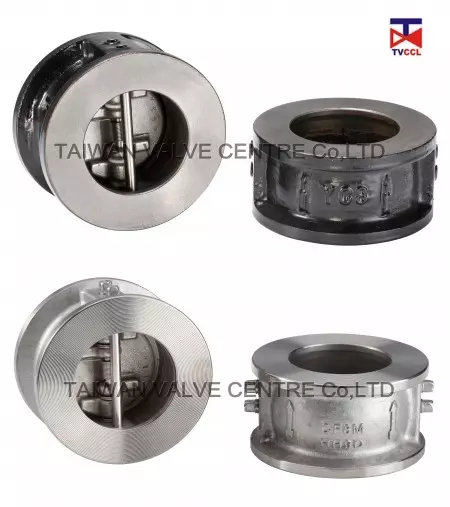
Dual Plate Wafer Type Check Valve
TC0
Fast Delivery: Most orders are shipped within 3-7 days, depending on stock availability. Versatile...
Details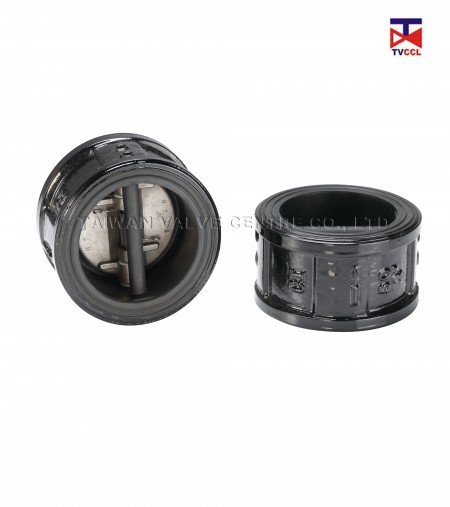
Dual Plate Wafer Type Check Valve with Full Rubber
TC1
Dual plate wafer type check valve with full rubber is usually used in seawater desalination...
Details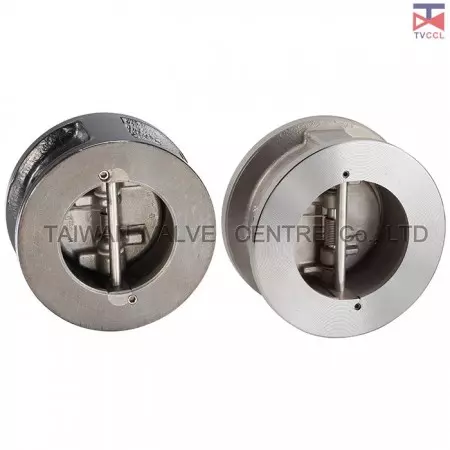
Dual Plate Wafer Type Check Valve With Retainerless
TC8
The dual disc check valve with its compact wafer design and low cost have made it a popular...
Details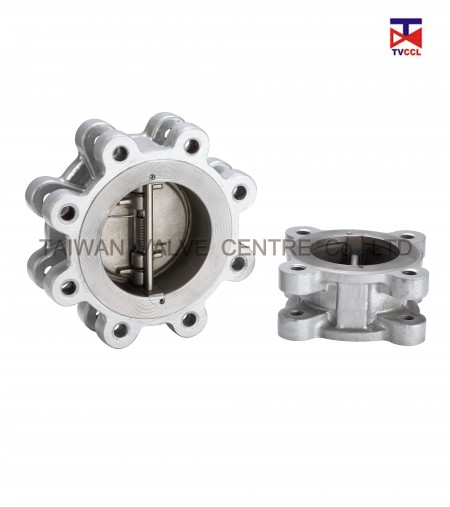
Dual Plate Lug Type Check Valve
TC6
Lug type double disc check valves typically feature multiple threaded bolt holes around the valve...
Details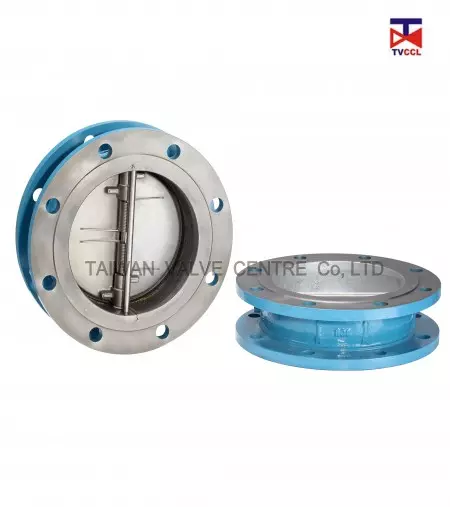
Dual Plate Flange Type Check Valve
TC4
Simplified Installation with Flange Type Design Unlike lug type check valves, flange type double...
Details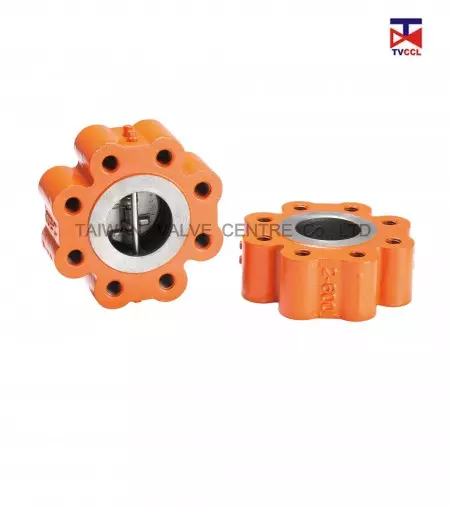
Dual Plate Full Lug Type Check Valve
TC9
Double disc lug type check valves are designed to ASME, JIS, ISO, AWWA...etc. specifications...
Details